

Not every surf helmet is a helmet
CE EN 1385 vs EN 812, explained
Anyone can print “surf helmet” on a box. Here's how to tell a certified water sports helmet from a bump cap, and why BangProof is the first soft-shell helmet to pass CE EN 1385.
Before you buy
“Surf helmet” isn't a protected term
Anyone can print it on a box, and plenty of brands do. A lot of what's sold as surf head protection is really a bump cap, built to EN 812: an industrial standard for knocking your head on a low pipe in a warehouse.
Bump caps are made for “minor bumps or knocks” and “do not offer protection from falling objects or heavy impacts”. Even some bump hat makers admit a bump hat “is not a substitute for a certified water helmet”. The ads rarely say so.
A fin travelling with a breaking lip is not a stationary pipe. Neither is a reef.
Two standards
Two labels. Two very different jobs.
Both can end up printed inside a surf hat. Only one was written for the water.
- 01
EN 812: industrial bump cap
Written for workplaces: protection when you bump your head on something that stands still, like a beam or a pipe. Made for minor bumps and knocks, not for heavy impacts or water sports.
- 02

EN 1385: water sports helmet
The European standard for helmets used in canoeing and white-water sports. Tested for impact absorption, strap strength and buoyancy: a helmet that's meant to take a hit, in the water.
- 03

BangProof: certified to EN 1385
The world's first soft-shell helmet to pass EN 1385, exceeding its impact-absorption requirement by 50%, impact after impact.


Hard shell, bump cap or BangProof
Three ways to protect your head in the water, and what each of them really offers.
 Hard-shell helmet |  BangProof | Bump cap / surf hat | |
|---|---|---|---|
| Certified as | Water sports helmet: usually CE EN 1385 | ✓ Water sports helmet: CE EN 1385 | ✗ Industrial bump cap: EN 812 |
| Tested for water sports | ✓ Usually (EN 1385 models) | ✓ Yes | ✗ No: written for warehouses |
| Built for heavy impacts | ✓ Yes | ✓ Yes: boards, fins, reef | ✗ No: “minor bumps or knocks” |
| Repeat impacts | Varies by model | ✓ Recovers after repeated impacts | Not specified |
| Cut protection | Rigid shell | ✓ Kevlar/Diolen composite | Not specified |
| Independent testing | Varies by model | ✓ #1 soft-shell in Virginia Tech testing | None published |
| Weight and feel | Heavy, stiff, bulky | Light, soft, adapts to your head | Light, soft |
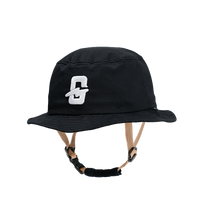
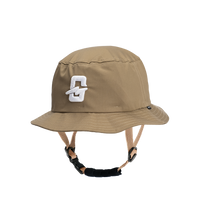
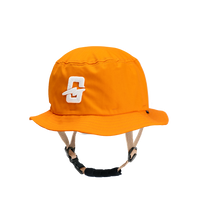
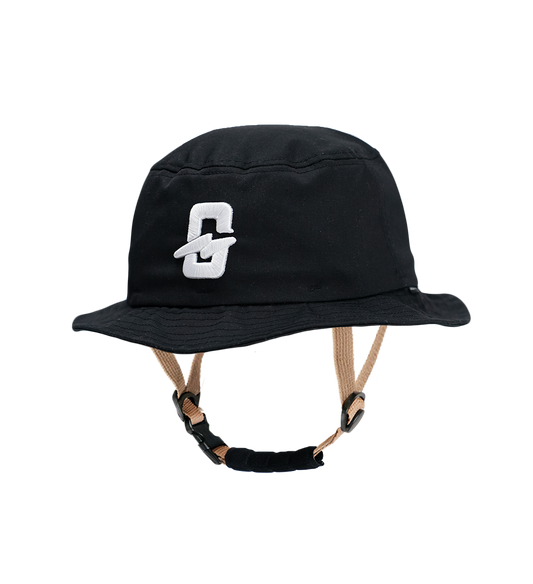
| Looks like | A helmet | A bucket hat or cap | A bucket hat |
| Verdict | Protection most surfers leave in the van | Protection you’ll actually wear | Not a helmet |
Hard-shell and bump-cap columns describe the categories, not a specific brand. Bump cap wording from EN 812 bump-cap makers.
Why it matters
What a certificate actually gives you
A certificate isn't a sticker. It's the difference between “trust us” and “tested”.
- 01
Someone else checked
A certificate means an independent test lab tested the helmet, not just the brand that sells it.
- 02
One published test
Every EN 1385 helmet passes the same published tests. You compare like with like, not marketing with marketing.
- 03
Tested for the job
EN 1385 was written for helmets that go in the water: impact absorption, strap strength and buoyancy.
- 04
Proof you can check
Certified products come with an EU Declaration of Conformity naming the standard. A box that just says “surf helmet” doesn't.
Why we are the only one
Why no other helmet hat has passed EN 1385
EN 1385 doesn't care how a helmet looks or feels. In the impact test the helmet is dropped onto a steel anvil, and sensors in the headform measure how hard the hit lands. Hard shells pass by spreading the hit across a rigid shell and crushing a foam liner. A hat has no rigid shell to lean on.
That's why most helmet hats add a thin foam insert and get tested as a bump cap instead. EN 812 is written for much smaller knocks, and it still lets the box say “certified”.
The difference is the foam. It stays soft at rest and stiffens the instant it's hit, absorbing the energy a rigid shell would normally spread. That's how BangProof passed every test in the standard and beat its impact-absorption requirement by 50%, impact after impact.
Proof
Proven in the lab, not just on the label
 01
The first certified soft shell
EN 1385the world's first soft-shell helmet to pass the water sports helmet standard
BangProof passed every test in CE EN 1385. No other helmet hat has done this.
CE EN 1385 certification
 02
Beyond the requirement
+50%above the standard's impact-absorption requirement
And it kept that result over the following impacts, so one hit doesn't end its job.
CE EN 1385 certification
 03
Independently tested
#1soft-shell helmet for water sports in Virginia Tech testing
In independent testing at Virginia Tech, BangProof gave better protection than most traditional hard-shell helmets, beating some by over 50% in certain tests.
Virginia Tech helmet ratings
 04
Certified materials
OEKO-TEXcertified textiles against your skin
Skin-friendly fabrics with a lighter impact on the planet, session after session.
OEKO-TEX certified textiles


How it works
How a soft helmet passes a hard test
Inside the shell sits impact-absorbing foam full of trapped air. It stays soft and flexible while you ride, stiffens in milliseconds on impact to absorb the energy, then springs back to its shape for the next one. Above it, a Kevlar and Diolen composite layer adds strength and cut resistance.
“Soft means weak.”
Soft is how it feels at rest. On impact the foam stiffens and spreads the force, which is how it passes EN 1385, the standard hard-shell water helmets are certified to.
“It only works once.”
It's designed and tested for multiple impacts in line with EN 1385, and returns to its original shape after each one.
“A fin or the reef will cut straight through.”
The Kevlar/Diolen composite layer adds anti-cut protection against fins, foils, rocks and reef. Diolen also resists abrasion and UV.
“Certified helmets are heavy.”
No heavy shell, no silicone: it's light, low-profile and shaped like a bucket hat or a cap.
Before you buy
How to check any helmet in 30 seconds
- 01
Find the CE mark
On the inside label or the box. Protective gear sold in the EU has to carry it.
- 02
Read the standard number
EN 1385: water sports helmet. EN 812: industrial bump cap. EN 1077 is skiing, EN 1078 is cycling.
- 03
Ask for the Declaration of Conformity
It names the standard the product was certified to. Ours is on the compliance page.
Certified helmets that look like a hat
View all-
Bucket v2 - Black
599,00 zł -
Bucket v2 - Orange
599,00 zł -
Bucket v2 - Pink
599,00 zł -
Bucket v2 - Leopard
599,00 zł


Certification
Certification questions
What is EN 1385?
EN 1385 is the European standard for helmets used in canoeing and white-water sports, the one standard written for helmets that go in the water. It covers impact absorption, the strength of the strap and buoyancy.
What is EN 812?
EN 812 is the European standard for industrial bump caps: headwear that protects against knocking your head on stationary objects in places like warehouses. Bump caps are made for minor bumps and are not designed for heavy impacts.
Is a surf hat with a foam insert a helmet?
Only if it's certified as one. Many surf hats with an insert are certified to EN 812 as bump caps. Check the label for EN 1385.
Is BangProof certified?
Yes. BangProof is certified to CE EN 1385, and it was the world's first soft-shell helmet to pass it. You can download our EU Declaration of Conformity on the compliance page.
Does it still protect after a hit?
Yes. BangProof is designed and tested for multiple impacts in accordance with EN 1385, and the foam returns to its original shape after each one.
Why haven't other helmet hats passed EN 1385?
A hat has no rigid shell to spread an impact, so it has to absorb the energy in its foam alone. Most helmet hats use a thin insert and are certified to EN 812 as bump caps instead. BangProof's foam stiffens on impact, which is how it became the first soft-shell helmet to pass EN 1385.