

Why surfers still refuse to wear helmets
The excuses, the injuries, and why it’s starting to crack
Helmets look kooky, run hot and nobody you surf with wears one. Here’s where that came from, what it costs, and why it’s changing
Surfing and helmets
It was never sort of some kind of accepted cool thing I think, growing up.
Helmets weren't small or comfortable enough back then, Slater says. “But they're getting there now.”
Ask around the car park and you'll hear the same list.
Honestly, it's more of a mental game to start wearing a helmet. You feel like all the cool kids don't wear helmets.
Some of that used to be true. Most of it is image. O'Brien won the Pipe Masters, split his head open at Pipe in 2022, and now wears a helmet at heavy spots.
“I feel like everything is changing,” he says, “and there'll be more helmets than ever.”
This is where that feeling came from, what it costs, and why it's starting to crack.
Surfing history
A short history of helmets in surfing
From industrial helmets at Huntington Pier to helmets that look like hats: sixty years of surfers deciding protection isn't for them, and the moments that changed their minds.

1959
Helmets at Huntington
At the first West Coast Championships at Huntington Beach Pier, competitors wore industrial helmets to get heavy longboards through the pilings. Then boards got lighter, the culture got cooler, and the helmet disappeared for decades.
1983/84
The wipeout that started it
Steve “Beaver” Massfeller goes headfirst into the Pipeline reef and needs a steel plate in his skull. Tom Carroll is watching, and decides that pushing at Pipe means protecting his head.

Late 1980s
The first surf helmet
A West Australian surfer, tired of getting his head stitched, builds the first helmet made for surfing: a hood-style fit with a light plastic shell.
1990–91
Two Pipe titles, zero converts
Tom Carroll wins back-to-back Pipe Masters in a helmet. The lineup still reads it as weakness.
2015–19
Helmets as a cast
Jeremy Flores wins Teahupo'o two months after head-butting a reef. Sally Fitzgibbons wins Cloudbreak over a perforated eardrum. Owen Wright wins Teahupo'o four years after a brain bleed. All three in helmets, all three after an injury.
2022
The tour steps in
The WSL starts supplying helmets to athletes at Teahupo'o, Cloudbreak and Margaret River.
2024
Helmets go mainstream
Pros stop waiting for an injury. More helmets than anyone can remember at the Pipe Pro, and Caity Simmers wins it in one. The ISA recommends helmets at Teahupo'o for the Olympics, and gold is won in one.

Now
A new kind of helmet
Soft-shell helmets and helmet hats that look like headwear start showing up in lineups. Protection stops looking like protection.


Surfing injuries
What really hurts surfers
Four questions surfers usually get wrong, and what the research says.
 01
What's the most dangerous thing in the water?
53%of surfing head and neck injuries in US emergency rooms came from hitting a board
A 2024 US study went through 20 years of emergency room records: an estimated 90,872 surfing head and neck injuries. More than half of them came from hitting a board.
And it's not only beginners. In November 2024, two-time world champion Tom Carroll took a fin to the head at North Narrabeen: four stitches, a very sore neck, and a ride off the beach on a spinal board.
Snyder et al., 2024; The Inertia
 02
Which part of the body sends surfers to hospital most often?
43%of surfing injuries in hospital and ER data are to the head, face and neck
More than any other part of the body.
McArthur et al., 2020 (review of 19 studies)
 03
In 2024, Kai Lenny suffered a serious head injury at Pipeline. Was he wearing a helmet?
Yes, for the first time at Pipeline. During his heat at the Da Hui Backdoor Shootout, a medium-sized wave drove him headfirst into the reef. The helmet split in half. He came up with a concussion, bleeding from his left ear, and almost no memory of the wipeout.
First time wearing a helmet at Pipeline and it may have saved my life.
Kai Lenny He still called it the worst injury of his career. The months after brought cognitive problems and depression, and for a while he lost the drive to surf at all. A helmet doesn't make you invincible. It moves the outcome from catastrophic to survivable.
The Inertia
 04
Do you have to hit something hard to get a brain injury?
13 of 40elite Australian surfers had been diagnosed with a concussion. The main cause: hitting the water.
When Surfing Australia surveyed 40 of its elite surfers in 2024, 13 had been diagnosed with a concussion, and the main cause was hitting the surface of the water. The rest, never diagnosed, still reported hundreds of headaches, dizzy spells and neck pain after wipeouts.
Ward et al., 2024


Helmet use
Twenty years ago, this was snowboarding.
One in four wore a helmet. Now it's nine in ten.
In the 2002/03 season, one in four skiers and snowboarders in the US wore a helmet. Today it's more than nine in ten. At the 2024 Pipe Pro, 22% of the men wore one: almost exactly where the slopes were twenty years ago.
NSAA helmet usage surveys (2002/03–2012/13); 2024/25: J2Ski.
2% in 2005. Still under 10% today.
Surfing has never counted its helmets properly. There's no lineup census, just a handful of surveys. The one hard number comes from Australia in 2005, when about 2% of surfers wore a helmet routinely. A 2024 study still puts everyday use at under 10%.
The tour moved faster. For decades helmets showed up there only “sporadically”. By 2024 they were part of the kit for about a fifth of the men and more than half of the women, and they're starting to follow the pros into everyday lineups.
Grey track = 100%. Australia 2005: routine use among 646 surfers (Taylor et al.). Today: upper estimate (Snyder et al., 2024).
Helmet design
Forty years of the same helmet. Then a different idea.
- 01
The hard shell
The first surf helmets were rigid plastic shells over foam. They protected, but they were bulky and hot, and pros name an even bigger complaint: extra buoyancy and a “parachute effect” that drags your head around underwater.
- 02
The long nothing
For decades the design barely moved. Kai Lenny says surf helmets have hardly changed in about 40 years.
- 03
Soft, and shaped like a hat
Soft-shell helmets and helmet hats stay flexible while you wear them and stiffen on impact. Protection no longer has to look like protection.
- 04
But be careful
Once helmets started to look like hats, hats started being sold as helmets.
Buying a surf helmet
Not every surf helmet is a helmet
“Surf helmet” isn't a protected term. Anyone can print it on a box, and plenty of brands do. A lot of what's advertised as surf head protection is really a bump cap, built to EN 812: an industrial standard for knocking your head on a low pipe in a warehouse.
Bump caps are made for “minor bumps or knocks” and “do not offer protection from falling objects or heavy impacts”. Even some bump hat makers admit a bump hat “is not a substitute for a certified water helmet”. The ads rarely say so.
A fin travelling with a breaking lip is not a stationary pipe. Neither is a reef.
BangProof
Where BangProof fits in
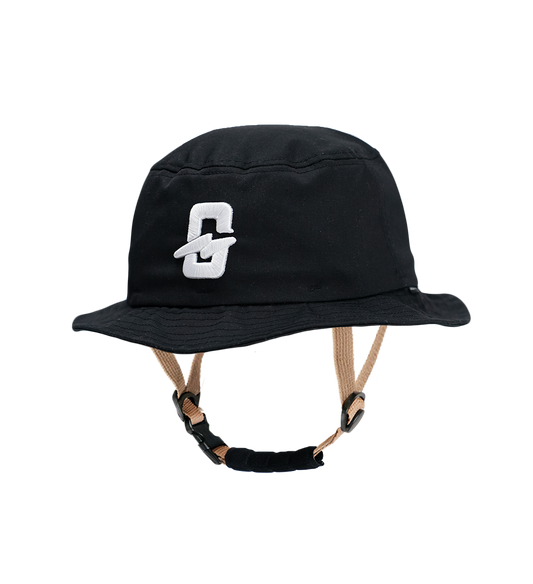
BangProof is part of that third wave: a soft-shell helmet shaped like a bucket hat or a cap, and the world's first soft-shell helmet certified for compliance with CE/EN 1385. Here's how it answers the excuses from the top of this page.
“It looks kooky.”
It's a bucket hat or a cap. From the shore it reads as headwear, not safety gear.
“It's heavy and hot.”
Soft, light and low-profile. It moulds to your head instead of sitting on top of it.
“I don't like a bulky thing on my head.”
The impact-absorbing foam stays flexible while you wear it and stiffens the instant it takes a hit. A Kevlar and Diolen layer adds cut resistance against fins, foils, rocks and reef.
“How do I know it works?”
The first soft-shell helmet certified for compliance with CE/EN 1385. 50% above the standard's impact absorption requirement. Ranked #1 soft-shell helmet in Virginia Tech testing.
Water sports helmet comparison
Hard-shell helmet, soft-shell BangProof or bump-cap surf hat: three ways to protect your head in the water, and what each of them really offers.
 Hard-shell helmet |  BangProof |  Bump cap / surf hat | |
|---|---|---|---|
| Certification | Varies by model | Certified for compliance with CE/EN 1385 | EN 812 (industrial bump cap) |
| Construction | Rigid shell over a foam liner | Flexible impact-absorbing foam + Kevlar/Diolen layer | Fabric hat with a plastic insert |
| Made for | Real impacts | Real impacts: boards, fins, reef | Minor knocks |
| Repeat impacts | Varies by model | Recovers after repeated impacts | Not specified |
| Cut protection | Rigid shell | Kevlar/Diolen composite | Not specified |
| Independent testing | Varies by model | #1 soft-shell in Virginia Tech testing | None published |
| Weight and feel | Heavy, stiff, bulky | Light, soft, adapts to your head | Light, soft |
| Looks like | A helmet | A bucket hat or cap | A bucket hat |
Choose your surf helmet
View all-

 -30% OFF
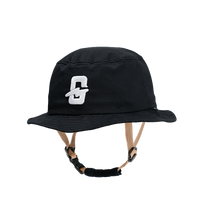
Bucket - Black
Regular price599,00 złSale price 419,30 zł You save 179,70 złSale -

 -30% OFF
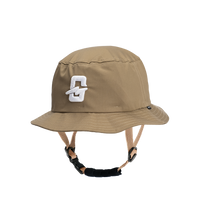
Bucket - Khaky
Regular price599,00 złSale price 419,30 zł You save 179,70 złSale -
Bucket v2 - Black
599,00 zł -
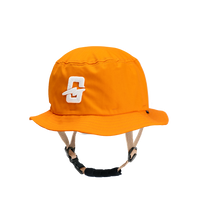
Bucket v2 - Orange
599,00 zł




How risky is your surf?
Your board, the reef or the crowd: what is most likely to hit you? Answer four quick questions and get your risk profile, plus three habits that keep you safer.
01 / 04
Where do you usually surf?
02 / 04
How busy is your line-up?
03 / 04
How would you describe your surfing?
04 / 04
How often do you take a proper wipeout?
Reef regular
Your waves break over rock and reef. The wave is rarely the problem; the bottom is. A fall that is harmless over sand is a different story at low tide over coral.
Where your risk comes from
Exposure
Based on your answers, not a medical assessment.
Three habits for your break
-
01
Check the tide before you paddle out. The same spot can be sand at high tide and reef two hours later.
-
02
Fall flat and shallow, feet first. Never dive head first into water you haven't read.
-
03
Come up with your arms over your head until you know where the bottom and your board are.
What it does for you
- Takes the hit Absorbs the knock from your board, a fin or the reef before it reaches your head. Certified to the water sports helmet standard.
- Ready for the next one Springs back to shape after every impact, so one wipeout doesn't end its job.
- You'll actually wear it Light, soft and shaped like a hat. Nothing heavy or bulky to leave in the van.
Crowded peak
You surf where everyone surfs. Most hits here come from other people's boards: loose ones, drop-ins and rails arriving from directions you weren't watching.
Where your risk comes from
Exposure
Based on your answers, not a medical assessment.
Three habits for your break
-
01
Hold on to your board. Letting it go hands the problem to whoever is paddling behind you.
-
02
Give yourself room on the peak. Most collisions start with a wave that had to be forced.
-
03
Surface with your arms over your head: loose boards arrive from where you aren't looking.
What it does for you
- Takes the hit Absorbs the knock from your board, a fin or the reef before it reaches your head. Certified to the water sports helmet standard.
- Ready for the next one Springs back to shape after every impact, so one wipeout doesn't end its job.
- You'll actually wear it Light, soft and shaped like a hat. Nothing heavy or bulky to leave in the van.
Whitewater learner
You're still learning how to fall. At this stage the hardest thing in the water is usually your own board, on a short leash, coming back.
Where your risk comes from
Exposure
Based on your answers, not a medical assessment.
Three habits for your break
-
01
Fall behind or beside the board, never in front of it.
-
02
Cover your head as you come up: the leash brings the board straight back to you.
-
03
Learn over sand, not reef, and stay clear of the main peak while you do.
What it does for you
- Takes the hit Absorbs the knock from your board, a fin or the reef before it reaches your head. Certified to the water sports helmet standard.
- Ready for the next one Springs back to shape after every impact, so one wipeout doesn't end its job.
- You'll actually wear it Light, soft and shaped like a hat. Nothing heavy or bulky to leave in the van.
Charger
You go for the waves most people watch from the channel. Heavy wipeouts and long hold-downs are part of your sessions, and your board comes down with you.
Where your risk comes from
Exposure
Based on your answers, not a medical assessment.
Three habits for your break
-
01
Protect your head on every session, not only the big days. The one that hurts is rarely the one you planned for.
-
02
In a hold-down, relax and save air. Come up covered, not fast.
-
03
Scout the bottom and your way out before you paddle out, especially on a new reef.
What it does for you
- Takes the hit Absorbs the knock from your board, a fin or the reef before it reaches your head. Certified to the water sports helmet standard.
- Ready for the next one Springs back to shape after every impact, so one wipeout doesn't end its job.
- You'll actually wear it Light, soft and shaped like a hat. Nothing heavy or bulky to leave in the van.
Surfing helmets
How soft-shell helmets work
How does a soft-shell helmet protect my head?
Inside the shell sits an impact-absorbing foam full of tiny air cells. At rest it stays soft and flexible, shaping itself to your head. When you take a hit, from your board, a fin or the reef, the trapped air compresses and the foam stiffens in milliseconds, absorbing the energy before it reaches you. Then it returns to shape, ready for the next one.
Is it really as safe as a hard-shell helmet?
In independent testing at Virginia Tech, BangProof ranked as the #1 soft-shell helmet and outperformed most of the hard-shell helmets tested: up to 25% better protection on heavy impacts, and up to 50% better on low ones.
Is it certified for surfing and other water sports?
Yes. BangProof is the world's first soft-shell helmet certified to CE EN 1385, the European standard for helmets in non-motorised water sports: surfing, kitesurfing, windsurfing, wing and foil, wakeboarding, SUP and kayaking. The standard covers impact absorption, durability and retention strength.
What happens after a big wipeout? Does it still protect?
Most hard-shell helmets rely on EPS foam, which is built for a single impact: after one serious hit it stays compressed and the helmet should be replaced. BangProof's foam recovers its shape and keeps its protective properties across repeated impacts, which is what a real session asks of it.
What about fins, reef and rocks?
Over the foam sits a Kevlar/Diolen composite layer. Diolen resists abrasion and UV, while Kevlar adds anti-cut protection against sharp fins, foils, reef and rock.
How should it fit, and why does it feel stiff at first?
Snug and stable, with no movement and no pressure points. A new helmet can feel stiff, especially in cold weather: wear it at home for 15–20 minutes and your body heat softens the foam so it settles to the shape of your head. Rinse it in fresh water after each session and dry it in the shade.

Looks like a hat,
works like a helmet
Buy now
